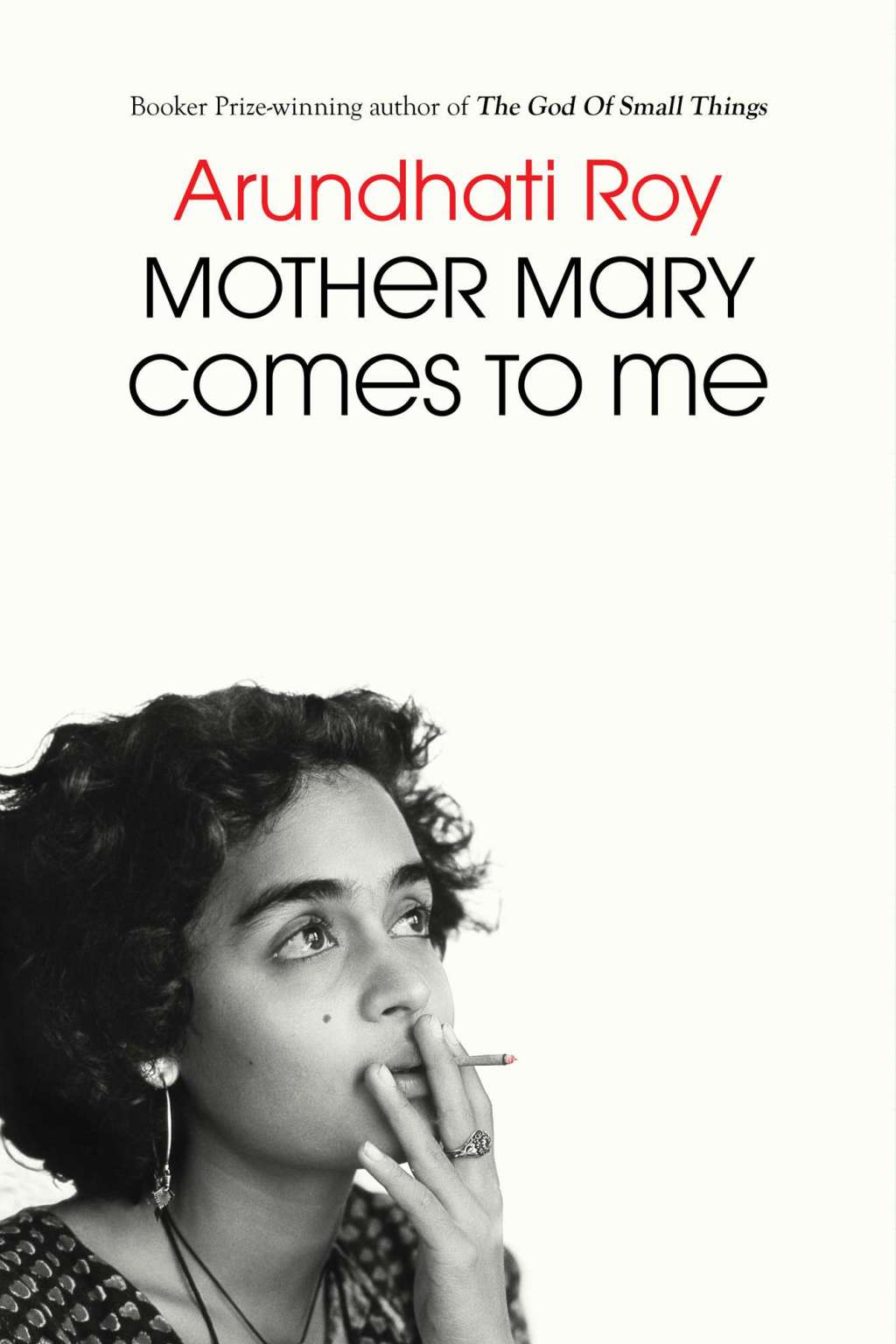
I placed an order for Roy’s latest book at a local online bookstore. As excited as I always am before receiving my new book, this time the anticipation was intertwined with a myriad of other questions and expectations; can literature take for its province, a whole society and for its purpose, its sentient reflections? What is literature? A social referent or a reflector?
Achebe rejected the notion that art could be purely aesthetic in the times of injustice, “Art for art’s sake is just another piece of deodorized dog-shit.” In a world marred with inequality, the claim that art has no duty is nothing short of a betrayel.
These questions lingered in my mind as I waited eagerly for the arrival of Roy’s latest work. Literature, after all, is more than mere storytelling; it is witnessing!! Primo Levi once famously said, “one must want to survive, to tell the story, to bear witness”, transforming the intimate and collective traumas into impenetrable literary monuments and unshakeable historical testimonies to what had transpired.
“You taught me language” says Caliban to Prospero in The Tempest, “and my profit on it is I know how to curse”. In invoking Caliban’s words one is unsettled by the power of literature to expose and disrupt social realities. Such literature is not merely an aesthetic industry, but a battle ground that wields language as means of liberation: subverting hegemonic agency of the oppressor.
The moral atrophy of the intellectual is a theme that occurs in most of the plays of African dramatist Wole Soyinka. The plays are a warning to the present generation intellectuals who either provide status quo or rationale away all the corruption or else they condone it with their silence. The intellectuals at the court of Mata Kharibu in his play, “A dance of the forests” are called in to rationalise and justify war and prosecute a warrior who refuses to go on war to recover queen’s clothes from the husband she has just left.
HISTORIAN: It is unheard of. War is the only consistency that past ages afford us. It is the legacy which new nations seek to perpetuate. Patriots are grateful for wars. Soldiers have never questioned bloodshed. The cause is always the accident, your Majesty, and war is the Destiny. This man is a traitor. He must be in the enemy’s pay.
MATA KHARIBU: He has taken sixty of my best soldiers with him.
HISTORIAN: Your Highness has been too lenient. Is the nation to ignore the challenge of greatness because of the petty-mindedness of a few cowards and traitors.
WARRIOR: I am no traitor!
The abdication of intellectual duty by the historian exemplifies how the collusion of intellectuals with power systems sustains cycles of oppression, making Soyinka’s warning to contemporary writers both urgent and timeless. In these circumstances, literature serves as powerful counterforce to intellectual abdication and perpetuation of injustice. The moral imperative and transformative potential of literature is captured in a famous declaration by Ellie Weisel, “”whoever listens to a witness becomes a witness” and is echoed in Roy’s statement, “we must never look away. And never, never to forget”, ensuring that traumatic histories remain visible in the conspiring complicity of knowledge and power.
A political slogan says, “We are free”, literature destabilises certainty and questions, “What is freedom? Who is excluded from it?” The answers usually hide uncomfortable truths and reinforce meanings by fixing things and discussions. Art opens up wounds and prefers ambiguity, making us face the unresolved contradictions in our lives. Art and literature, in the words of James Baldwin have, “ the purpose of laying bare the questions that have been hidden by answers”. Roy’s literary insistence tries to dig out these raw questions that answers try to bury. In ‘Ministry of utmost happiness’, Roy dares to ask that most would rather avoid, questions that would resist easy answers. What about Anjum who is born in the city and yet claims space in a the graveyard? What about ghosts that don’t leave after riots, massacres and disappearances? What about half-widows, the adivasis? Does the true justice exist in human systems or is it always deferred?. The questions many would blame to distrupt peace in a society that orgasms infinitely on fetishes of communal hate and jingoism. For Baldwin, writers actually are “disturbers of peace”, confronting myths and fetishes that shield societies from their realities.
A novel becomes a vessel to transmute suffering into a connection and writing becomes a moral archive in her, ‘The God of small things”. The lyrical attention to the trivial in ‘The God of small things’, insists that injustice should be recorded in detail. On remembering and testifying to trauma, American novelist Toni Morrison fixes the responsibility of definition on the writer and holds their freedom responsible for freeing the prisoners of prejudice by shattering the ever-encaging neutral euphemisms of power. Through the traumatised consciousness of twins Estha and Rahel, Roy demonstrates how oppressive social systems and intimate betrayals intertwine. The “forbidden love” between Ammu and Velutha shows personal trauma is often a reflection of larger societal injustices. The book questions the possibility of healing in a deeply fractured society.
“The writer is of service to humankind only if he or she is willing to state what is unacceptable.”, for Nardine Gordimer literature is moral when it refuses the imposed silence. Oppression survives only through silence (and a sense of safety it entails), Roy very conveniently breaks the silence (while breaking out of the safety it entailed; doesn’t writing therefore liberate both the writer and reader.) in her books, ‘My Seditious heart’ and ‘Azadi’ by dissecting questions on sensitive topics of nationalism, secularism and pluralism. She urges the reader to engage with the world more critically.
Alexievich’s Nobel Prize-winning “novels of voices” demonstrate how literature can orchestrate individual testimonies into “symphonic panoramas of history”. Her methodology of collecting witness testimonies from the marginalised and rendering them into polyphonic literary mosaics resembles Roy’s approach in works like “Listening to Grasshoppers” and her works on Kashmir. Both authors utilise testimonial literature to challenge dominant narratives. They elevate the silenced experiences and create a soundscape of resistance. Roy’s famous declaration that “writers imagine that they cull stories from the world. I’m beginning to believe that vanity makes them think so. That it’s actually the other way around. Stories cull writers from the world” reveals her belief that writers are a vessel through which traumatic histories demand expression.
As I await the arrival of Roy’s latest work, ‘Mother Mary comes to me’ , I am reminded that literature’s true power lies not only in its ability to tell stories but to serve as a beholder of justice; testifying for the oppressed. This probably is the anticipation I carry, knowing that Roy’s words will once again unsettle.
 The K-Blog
Leave a comment