Carry your country wherever you go and be
A narcissist if need be
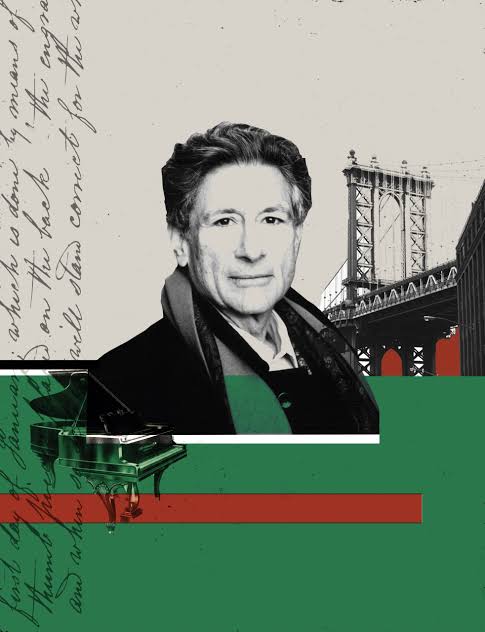
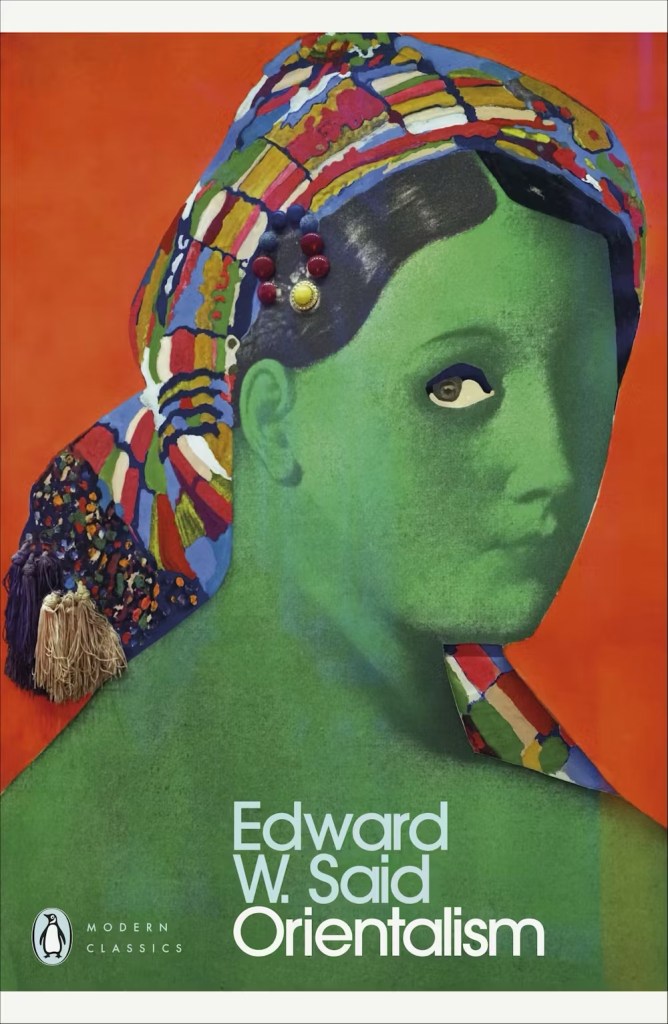
Edward Said, born on 1 November, 1935 was a Palestinian American academic and literary critic who is known for his book Orientalism, one of the most influential scholarly books that deals with the topic of constructed dichotomies, stereotyping and essentialism. His father was a businessman who had lived in the and taken a U.S. citizenship. In 1947, the family moved from Jerusalem to Cairo in order to avoid the conflict due to partition of Palestine into separate Jewish and Arab areas. Here he was educated in English-language schools before transferring to the exclusive Northfield Mount Hermon School in Massachusetts in the United States in 1951. He attended Princeton University and Harvard University, where he specialised in English literature. He joined the faculty of Columbia University as a lecturer in English in 1963 and in 1967 was promoted to assistant professor of English and comparative literature.
Said wrote numerous books and articles in his support of Arab causes and Palestinian rights. He was especially critical of U.S. and Israeli policy in the region, and this led him into numerous, often bitter, polemics with supporters of those two countries.
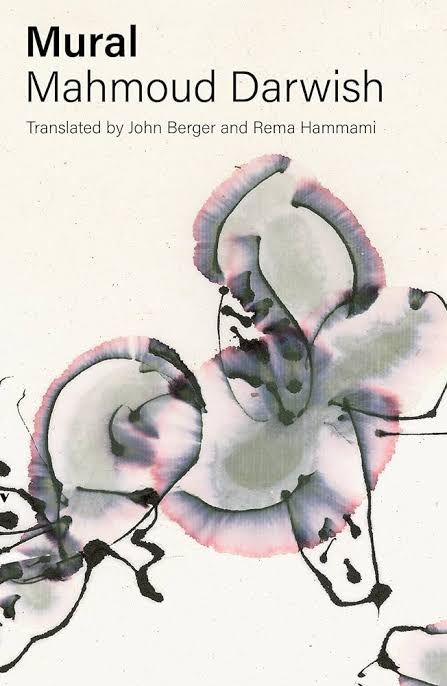
Mahmoud Darwish (1941-2008) was a Palestinian poet and one of the most influential literary voices of Palestine. He was born in Al-Birwa in Palestine. Darwish and his family fled during the Nakba (1948) and he spent much of his life in exile, living in Lebanon, the Soviet Union, Egypt, Jordan, Tunisia, and France. He became deeply tied to the struggle of his countrymen. His major works include Mural (a reflection on mortality and legacy), Unfortunately, It Was Paradise (a collection of his later poetry), Memory for Forgetfulness (a prose-poetic account of the 1982 Israeli invasion of Lebanon) and The Butterfly Burden. His poetry is seen as an emotional rendition of the displaced persons throughout the world.
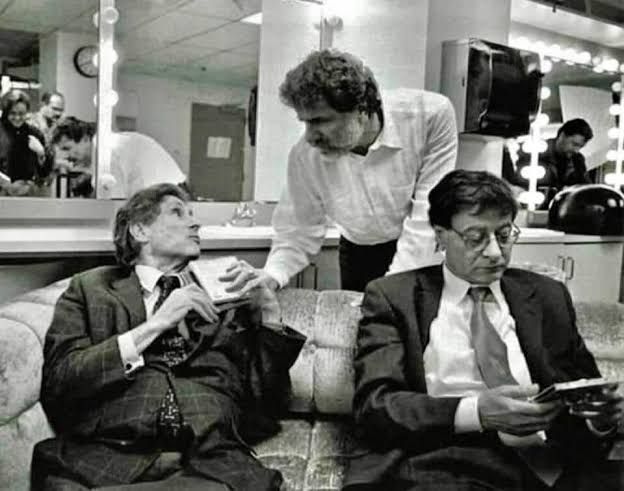
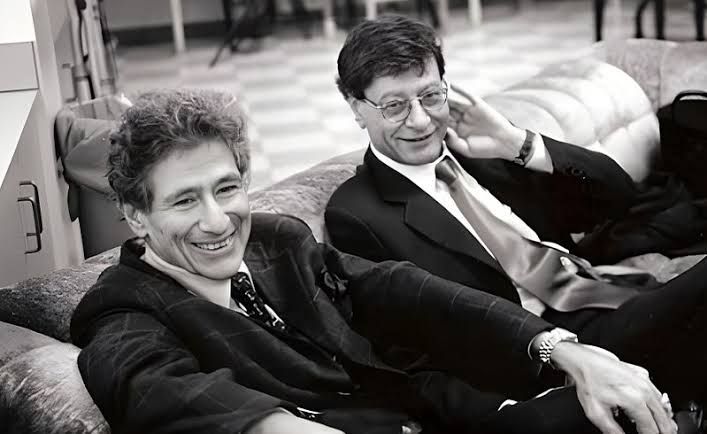
The relationship between the two was that of mutual respect, intellectual camaraderie and a shared experience of exile. Their writings had similar themes and they influenced each other’s works through dialogues that spanned ovef politics, philosophy and the meaning of home.
Born in Jerusalem and later relocated to Cairo to escape the escalating conflict over Palestine, Said’s early experiences were marked by cultural and political upheaval. A very personal history of displacement exposed him to numerous interplays of identity and contradictory cultural narratives.
Mahmud Darwish’s poem ‘Tibaaq‘ (طباق) is a tribute to Edward Said and was written in 2002 when Said was battling Leukaemia. The word “Tibaaq” means weaving together contrasting elements into an oppositional harmony. Darwish’s poem tries to portray Said through Said’s own idea of “contrapuntal identities”. In music contrapuntal melodies comprise of different musical frequencies, which when played together interweave an organic and harmonious whole.
He says: I am from there. I am from here
But neither am I there, nor here.
Darwish refers to multitudes of identity that made up Said. He did not belong to a single place; his personality was sometimes a rich tapestry and other times a ragged canvas, woven with elements of Palestine, the US, and Cairo; shaped by his identity as a Palestinian Christian, an Arab, and an American academia, all coexisting within his psyche at every moment.
A contrapuntal identity creates a harmonious self, an wholesome individual from distinct and many a times differing narratives, something that Said has expounded upon in his masterpiece Orientalism. Edward said dealt with how a subject is caught between conflicting sensitivities, fragmented definitions and contradictory viewpoints of idolised West and exoticized East and how he often internalises them. All this leads to a layered experience of exile, a cultural hybridity and most important of all – a state of multiple truths within a same person.
I have two names. They meet and they depart…..
And two languages, I have forgotten in which I used to dream.
I have English for writing
Its vocabulary is obedient,
Yet, I have another language from the dialogue of the Heavens
Said, who spent most of his life in the West advocating for Palestinian rights, embodied these internal contradictions Darwish’s ‘tibaaq’. He created a Self by merging and negotiating various aspects of his history, culture and personal experience.
This physical displacement is mirrored in his linguistic ambiguity according to Darwish, where a person straddles between different cultural realms. A man dreams in Arabic, speaks American and tries to imagine himself in between the two. It is this cultural duality that Edward Said would refer to in one of his last interviews with Tariq Ali:
“I had to sort of make myself over and over again”
Identity is the offspring of birth,
but in the end, it is the creative act of its owner.
not an inheriting past
Said and Darwish both challenged identity as a fixed inheritance, instead it was static, “a creative act of its owner” and consciously built by the individual with his internal responses to the outside forces and environment.
And your identity? I said.
He said: Self-defence
The reply to the question of identity which is constantly under attack is particularly striking. To assert one’s identity one is to resist erasure. Identity is something constantly re-affirmed, protected and fought for. A mere survival- holding onto the memory, history and language is an act of self defence for the Palestinians. This can be extrapolated to all the colonised all over the world.
Would they say to me: There is no place
For two dreams in one bedchamber?
Palestinian refugees cannot return to their own home where the occupiers justify his own presence as some sort of a historical right. These lines refer to two competing claims to the space. The dream of return to home competes with the dream of the coloniser. The question deals directly with the confrontation of Zionist project with the Palestinian existence.
The external world is an exile
So is the internal world
And between them, who are you?
The poet presents exile in its multiple spaces, above and beyond its geographical perimeters, extending into a very personal emotional landscape. It can create rootlessness, alienation and nostalgia that can lead to ‘fracturing of self’. This emotional extension can intensify feelings of exile even in physical comfort creating an imagined pain of being an outsider. The burden of memory becomes both a sanctuary and a dungeon, sometimes liberating and other times incarcerating.
He was alone in his yesterday, alone in tomorrow’s memory
While exile is painful but it can also be intellectually liberating, creating a unique perspective which is simultaneously detached and deeply engaged. A deep connection to his native culture which was re-inforced by exile was evident in almost every work of Said something that Darwish scribbles with an almost poignant eloquence:
I have another language from the dialogue of the Heavens
With Jerusalem. its cadence is silvery
A dialogue between heaven with homeland that is permeated with a sacred love for the homeland. It is a connection whose cadence defines both the mundane and the spiritual of the person in exile.
I tried to
Relive my birth,
To follow the path of the milky way on the roof of my old house,
I tried to feel the skin of exile, The smell of summer from the jasmine in the garden.
Darwish moves from spiritual to sensory, revealing one more facet of loving the homeland while in exile.The old house, the scent of summer, jasmine blooming in the garden, and the quiet urge to repeat the touch of home on one’s skin all symbolise a deep longing to return and relive its essence. An urge to reconstruct a fading memory despite the pangs of separation and inescapable distance that the exile inscribes upon the self.
Edward Said referred to all these aspects of Exile in “Reflections on exile”. According to him:
“exile is strangely compelling to think about but terrible to experience. It is the unhealable rift forced between a human being and a native place, between the self and its true home: its essential sadness can never be surmounted. And while it is true that literature and history contain heroic, romantic, glorious, even triumphant episodes in an exile’s life, these are no more than efforts meant to overcome the crippling sorrow of estrangement.”
I shall select my exile. My exile is the background
Of the epic scene; I defend the poets’ need for tomorrow
As well as their need for memories
I fight for trees that the birds wear
As a homeland and an exile,
For a moon befitting a love poem,
I fight for an idea shattered by the fragility of its creators
An intellectual who is left bereft of is country always fights to preserve the symbols of homeland against the forces that want to obliterate them. In his books ‘Orientalism’ and ‘Culture and Imperialism’ and his numerous other Palestine centric op-eds, essays and interviews, Said dismantled how the Western Academia and media and media-industrial complex misrepresented Palestine. He exposed the biases and stereotypes underpinning these charged narratives that are used covertly to justify the colonisation of people. His articulate commentaries helped to portray Palestine as a cause of human rights and justice, and gave it a semblance of dignity. It reaffirmed a Palestinian nationhood.
Said’s academic influence in Western Colleges helped him encourage the students to critically examine ways in which language was mis-used to marginalise Palestinian voices and aspirations. So he “fought for an idea shattered by fragility of its its creators” by advocating cultural reclamation of Palestinian heritage and dedicated consciousness of Arab intellectuals towards the return of the displaced, as a means to counter oppressive narratives. In his own words:
“We can not fight for our rights and our history as well as future until we are armed with weapons of criticism and dedicated consciousness.”
He said: If I die before you,
I urge you to cling to the impossible!
In the closing lines Said asks Darwish to cling to their shared cause of liberating the homeland and advices him to not lose hope in the wake of any catastrophe and to believe in the achievement of the unattainable- freedom, justice and return, even if it seems impossible.
In the year two thousand and two,
He was resisting the war of Sodom against the Babylonians
And cancer. He was like the last epic hero…… bid the poetry of pain farewell.
The poem ends with a “farewell to poetry of pain”, signifying a defiant stand against oppression and moving towards a poetry that if defined by a memory of pain is not imprisoned by it.
“Texts are not finished objects.”
(Edward Said…Culture and Imperialism)
 The K-Blog
Leave a comment