
Khawar Khan Achakzai
Politics have been a part of every Prophet’s teachings and indispensable aspect of semitic and Abrahamic traditions. But somehow the Pauline Jesus has been shown as an apolitical figure, with absolutely no interest in the state, the Roman occupation of Palestine and Jewish resistance to it. The reasons are clear, the current Christian history is not related from the people closest to Jesus (Eesa A.S) but from Paul (Saul of Tarsus), who started his life with prosecuting early converts to Jesus’ teachings but later converted to christianity. Paul (mis)interpreted the “Kingdom of God” as something beyond the palpable human world when ‘Kingdom’ is actually a civic term and has strong political connotations. The reason to Paul’s mis-representation being that he had become a Roman citizen and hence could not afford anything provocative towards the empire, especially when he was trying to lure them into his own version of ‘Jesus Movement’.
But how would have the historical Jesus been if the history were written by one of his close and unbiased apostles?
‘Kingdom of God’ or ‘Kingdom of Heaven’was prophesied by John-The Baptist (Yahya A.S, son of Zachariah). By it he meant both: a spiritual Kingdom: where all the deliberate errors that had crept into Mosaic/Abrahamic code are shun, a political Kingdom: against the cruelty of the Romans.
وَآتَيْنَاهُ الْحُكْمَ صَبِيًّا – وَحَنَانًا مِّن لَّدُنَّا وَزَكَاةً
“And We gave him judgement, while yet a boy – And affection from Us, and purity.”
John predicted Jesus as a religious and political saviour of Jews. When Romans had started mercantilistic entrepreneurships over the land, John in his claim that land belonged to God, had presented a threat to the Roman empire and its enforcing auxiliaries in Palestine i.e the Jewish red tape. He had produced a spark to what could be a revolution. John’s prophesy intimidated Herod (the Roman puppet ruler of Palestine) and was hence executed.
Jesus started his mission, both political and religious. He wanted Jews to return to the true teachings of Lord and at the same time raised voice for a ‘Kingdom of God’. He was again a threat, both to the religious bureaucracy of Jews and the political organisation of Romans. Hence, he was sentenced to be crucified (from which Allah saved him in a miraculous way). Some Jews accused him of heresy but the Jewish punishment for heresy was stoning!
Why was he sentenced to a crucification and not stoning? That was because crucification was a punishment according to Roman law and Jesus had offended the Roman empire by his call for ‘Kingdom of God’ alone, it was a call for a rebellion.
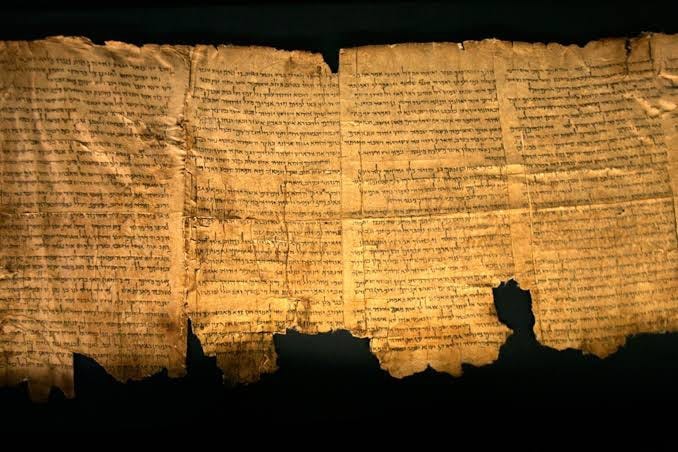
Some of the earliest records point to this. Infact, one section of The Dead Sea Scrollsis named as, ‘Scrolls of War’ (The War of the Sons of Light Against the Sons of Darkness, also known as War Rule, Rule of War and the War Scroll).
John-The Baptist who foresaw the Jesus mission and, according to the Christian traditions, baptised Jesus; surprisingly finds only a passing mention (negligible) in the New Testament? Why would someone who baptised Jesus find such little space in the “gospel”? The reasons being precisely the same: He was executed by the Romans as a state offender and the author of Gospel had to be careful about that while living close to the state.
According to early Jewish historians, James (brother of Jesus) continued to teach the real teachings of Eesa and those of the early Jewish Church, but it were the Pauline teachings that survived; because they were politically very neutral and palatable (infact appeasing) to the politicians of those times.
The Jesus Resistance remains lost in a misrepresented history which favoured the system back then and which continues to favour the Western capitalist and material narratives right now.
 The K-Blog
Leave a comment